
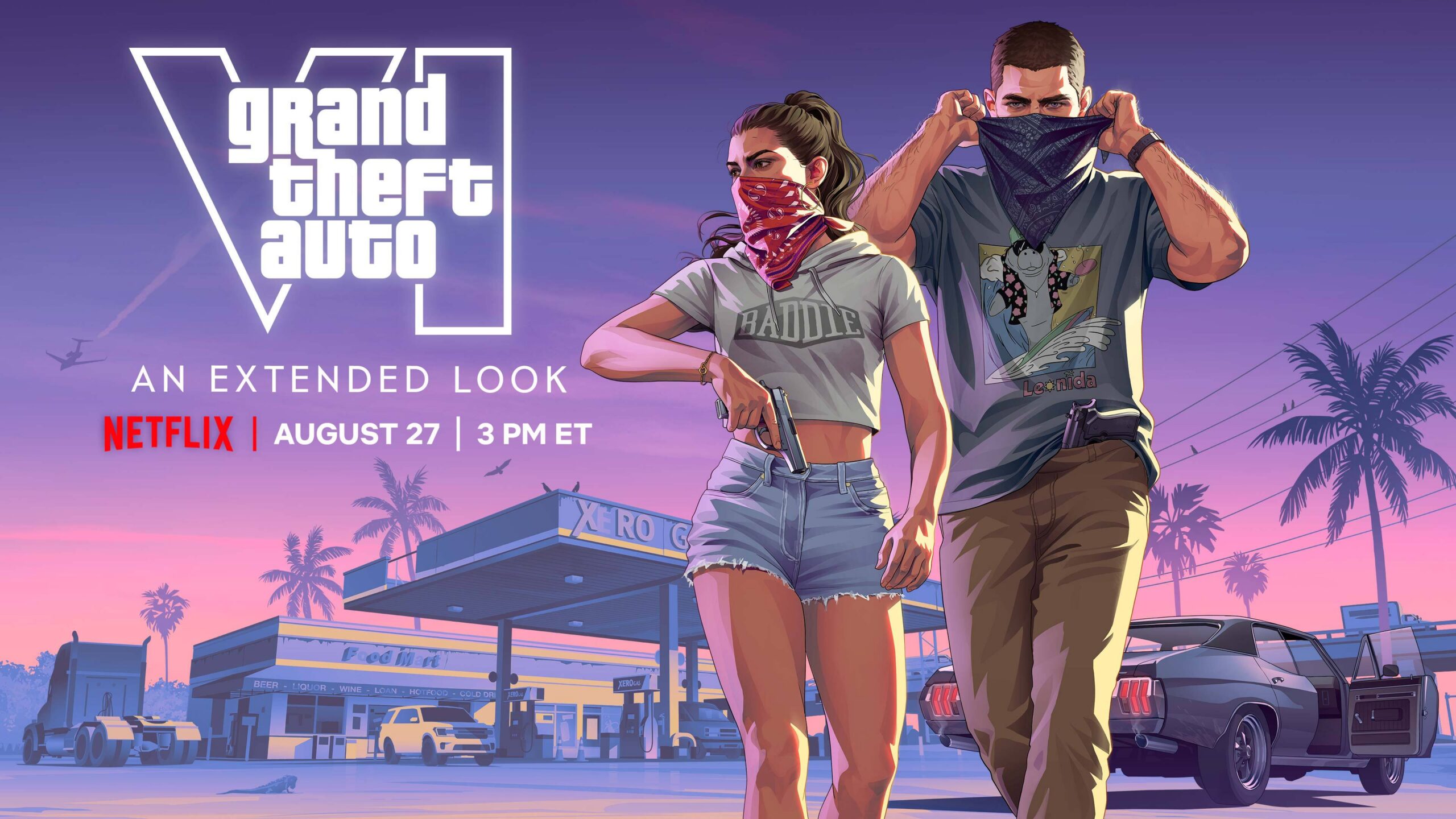
Ten days before Rockstar shows anyone a frame of it, the GTA VI Extended Look is already the most discussed video of the year. Nobody has seen it. That did not stop Digital Foundry devoting a segment to it, or IGN and PC Gamer reaching back to GTA IV to guess at it. Elsewhere, Kingdom Hearts 4 got a window, a delay denial and a Disney+ series in one D23 weekend, Halo: Campaign Evolved’s PC version got a bruising from the same Digital Foundry, and Marvel Tōkon’s first-week number arrived from the one analyst who seems to produce every number this month.
GTA VI: Everyone Is Reacting to a Video That Does Not Exist Yet
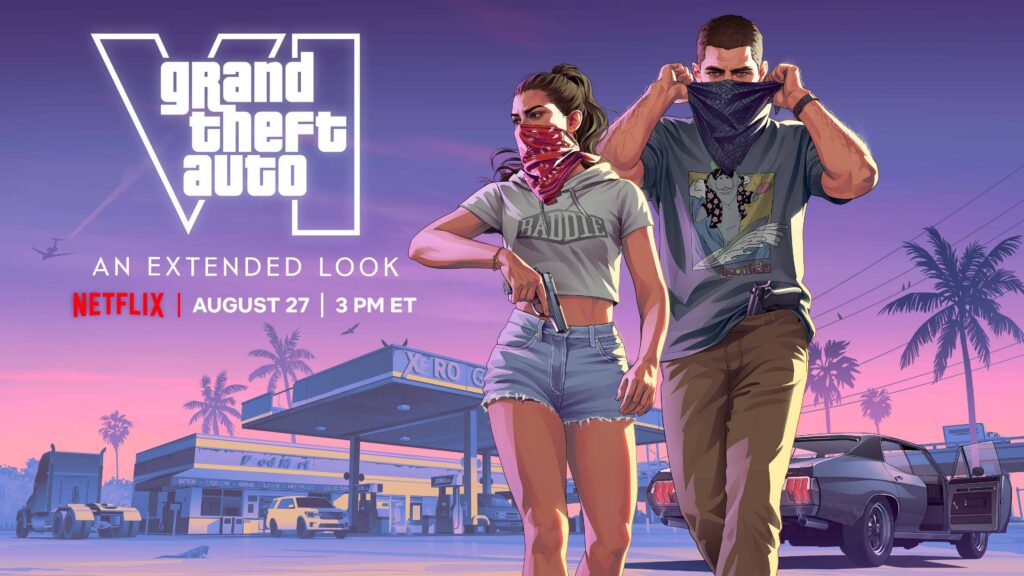
Grand Theft Auto VI: An Extended Look premieres on Netflix on August 27, then on Rockstar’s YouTube channel and the GTA VI site six hours later. That is Rockstar’s noun for it, and it is the only first-party fact about the video that exists. Its length, its structure and its contents are all unknown, and Friday’s Rumour Ledger tracks three incompatible runtime claims and one collapsing three-episode listing to prove it.
None of that has slowed the reaction. Digital Foundry gave the announcement a segment on DF Direct Weekly #276, asking what to expect rather than what was shown. IGN ran a piece from a writer replaying GTA IV for the first time since 2008 and arguing for what VI should carry forward. PC Gamer went back to GTA IV’s multiplayer, the mode that predated GTA Online, and made the case for it as glorious chaos in its own right.
Why it matters: when the only available material is an announcement, coverage fills the gap with the back catalogue. GTA IV becoming the lens for GTA VI is what that looks like. It is speculation, and should be read as such.
The PlayTheory take: Rockstar named this an Extended Look, not a trailer, and that distinction is going to matter more the closer we get. Every outlet reaching for the word trailer is inferring a format Rockstar has not confirmed. Ten days out, the honest position is that we know the date and the platforms and nothing else, and we will say so until August 27 changes it.
Kingdom Hearts 4 Gets a Window, a Delay Denial and a Disney+ Series
D23 turned into a Kingdom Hearts showcase on Saturday. Disney and Square Enix screened an extended gameplay trailer with playable Mickey, Donald and Goofy, confirmed a late 2027 release window, and announced a companion animated series for Disney+ and the Disney Channel.
The line that travelled was the delay denial. Co-director Tai Yasue told the panel he could confidently say and promise a 2027 launch, calling development very smooth and describing the window as a 100 percent thing rather than 80 or 90. Tetsuya Nomura, asked about delay speculation, said he wanted to set the record straight and that it was not happening.
Disney also disclosed that Kingdom Hearts has passed one billion dollars in retail sales, one of nine gaming franchises the company holds at that level.
Why it matters: a developer promising no delay on a game sixteen months out is unusual, and worth holding them to. Kingdom Hearts III slipped repeatedly. This is Square Enix and Disney putting their names to a date in public.
The PlayTheory take: a promise is not a schedule, and a late 2027 window is wide enough to absorb a lot of slippage before anyone has to call it a delay. But the tone has changed. Nomura and Yasue chose to volunteer confidence rather than deflect, and that is the more interesting signal than the window itself.
Halo: Campaign Evolved’s PC Version Gets a Bruising, With a Patch Promised
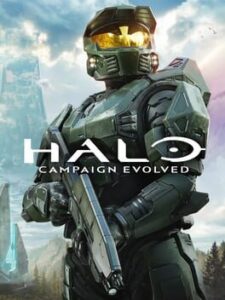
Digital Foundry’s PC review found a strong campaign undermined by technical problems, and published optimised settings alongside it. That followed its console face-off across Xbox Series X and S, PS5 and PS5 Pro the week before. GameSpot reports a first major patch is due next week with more visual controls and fixes for some of what DF found. No date has been given.
This lands on top of a bad fortnight for the game’s numbers and its studio: a sales estimate revised down by 30 percent, and departures at Halo Studios that Xbox has not confirmed on the record.
Why it matters: a good campaign in a rough PC port is a familiar shape this generation, and a promised patch is not a delivered one.
The PlayTheory take: we would hold off on PC until the patch lands and gets an independent look. Steam players are already at 83 percent positive, which is warm rather than glowing, and the technical complaints are a plausible reason why.
Sony Has Now Explained the End of the Disc, and the Reason Is the Number
Digital Foundry’s Q+A this week picked over what it framed as Sony’s first response to the backlash over ending disc production. The full response is on the record. On the July 31 earnings call, chief financial officer Lin Tao said the biggest factor was that the digitalisation of content overall has been progressing, described the shift as happening across many forms of media rather than PlayStation alone, and said the company would cautiously move this forward. She acknowledged that fans hold strong views and that physical collections carry emotional value.
The figure underneath that is the argument. In the same quarter, Sony reported digital game revenue of 1.2 billion dollars against physical game sales of 128 million. Digital is now more than nine times physical. Disc production ends in January 2028, which is roughly eighteen months of notice.
Why it matters: we put a number on the second-hand market this decision ends back in July, more than seven billion dollars. Sony has now put a number on the other side of the ledger, and it is a nine to one ratio it is not going to unwind for sentiment.
The PlayTheory take: what Tao did not address is the part people are actually angry about: ownership, resale, preservation, and who sets digital prices when there is no disc to undercut them. Acknowledging that physical games carry fond memories is not an answer to any of those. The decision is explained. The consequences are still not.
Roblox Faces a Congressional Investigation
US senators Josh Hawley and Dick Durbin have announced a congressional investigation into Roblox, tied to claims about harm to children on the platform.
Why it matters: Roblox has weathered years of reporting on child safety. A bipartisan Senate investigation is a different order of scrutiny from press coverage, and it lands as the platform is pushing further into brand deals and older audiences.
The PlayTheory take: Roblox’s moderation problems have been documented for years; a formal investigation can force changes that reporting has not. Watch for what Roblox says on the record and how quickly.
Marvel Tōkon Sold About 485,000 in Week One, by the Analyst Who Counts Everything
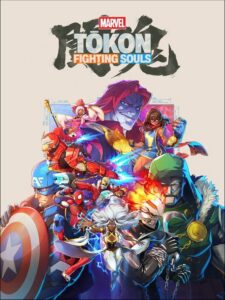
Alinea Analytics estimates MARVEL Tōkon: Fighting Souls sold 485,000 copies as of August 12, its first week, with PS5 taking 74 percent and Steam 26 percent. That is the same firm whose Halo estimate was revised down by 30 percent this month, and it is the only source for this number too. Treat it accordingly.
PC Gamer separately praised the game’s combo trials as an elegant tutorial other fighting games should copy.
Why it matters: fighting games rarely post first-week numbers like this outside the biggest names, so if the estimate holds it is a strong start. But the more useful signal is in our own data: the game is 4.42 out of 5 on PlayStation and 49 percent positive on Steam, and the PC port is the reason. A 74 to 26 platform split is what that looks like in sales.
The PlayTheory take: good tutorialisation predicts staying power in this genre better than a launch week does. The PC reception is the thing to fix, and the sales split says players have already priced it in.
Which of these are you actually waiting on: the Extended Look on the 27th, or a Kingdom Hearts date sixteen months out? Come argue it out with us on Discord.
Sources: Digital Foundry (DF Direct Weekly #276, Halo PC review, DF Direct Q+A), IGN, PC Gamer, GameSpot, Shacknews, Alinea Analytics.