
TAKE-TWO · STRATEGY · 7 AUGUST 2026
The GTA VI headlines from Take-Two’s Q1 call will be about a pre-order number the company refused to give. The more consequential answers came later, when analysts stopped asking about November and started asking about everything after it. Strauss Zelnick named the condition that starts the next acquisition spree, set a ten-year target for where Take-Two’s money comes from, and put a date on cloud streaming actually working.
The acquisition trigger
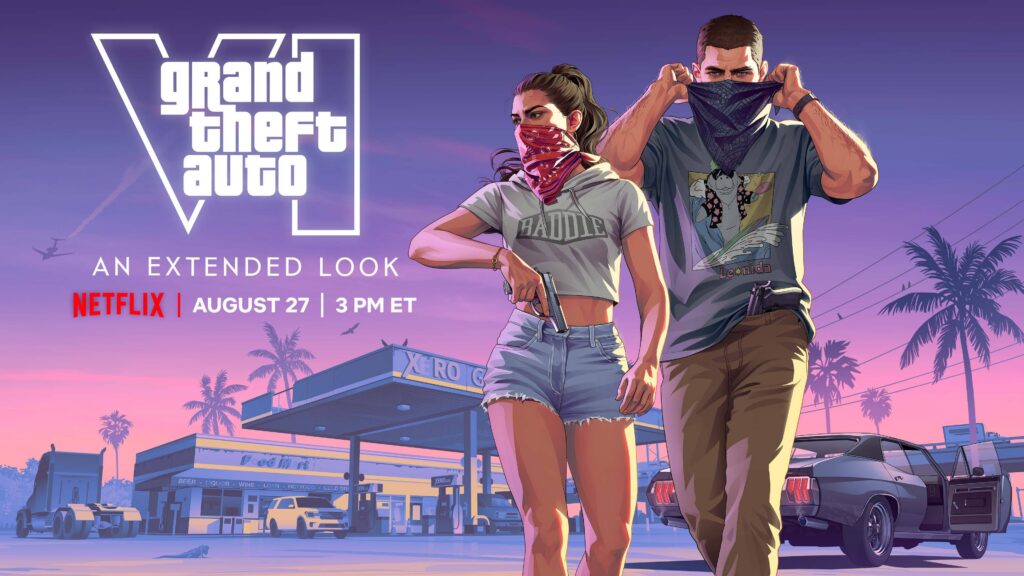
Take-Two has been explicit for a year that GTA VI generates a war chest. Today Zelnick attached a condition to spending it. He described an “allergy to being overleveraged,” and noted the company carries “very, very light net leverage” now. CFO Lainie Goldstein put a date on the rest, saying Take-Two is “on track to be in a Net Cash position by the end of the fiscal year,” which closes March 31, 2027. Then the line that matters: “once we’re back in the net cash position I think that would be the time when we’d be more likely to think about an inorganic opportunity.”
A trigger plus a date is the closest thing to a schedule Take-Two has offered. He also set the filter. Every deal is tested against three questions: is it buying owned intellectual property, is it buying tools and teams worth having, and is the transaction immediately accretive to EBITDA and to GAAP earnings. In plain terms, that last test asks whether a deal adds to profit straight away rather than costing money for years first. EBITDA is a rough measure of the cash a business generates before interest, tax and accounting write-downs are taken out. Cultural fit sits on top as a fourth test. He rated the record “excellent,” saying virtually every deal has been accretive and long lasting, and named Zynga and Gearbox.
On gaps in the portfolio he was dismissive. Take-Two is already big in mobile and big in console and PC, so “we don’t have any must-haves, but there are some, certainly some nice-to-haves.” Opportunistic, in other words, and buying from strength.
The contrast with the rest of the industry is hard to miss. EA went private this month carrying roughly $20 billion of debt. Take-Two is waiting to be net cash before it buys anything. Two of the largest publishers in the business are approaching the same moment from opposite balance sheets. We looked at what Take-Two’s side of that could buy when it first signalled the intent.
The ten-year plan to move the revenue
Zelnick spent his longest answer of the call on geography, and it was the most revealing thing he said. Companies “like Take-Two, and there are many of us,” he said, “basically derive about 80% of their revenue from the US, Western Europe and one or two countries in Asia.” He is characterising a class of publisher that includes his own, not disclosing a Take-Two split. The company publishes no geographic revenue breakdown, and none appears in the results release or the earnings deck. The rest of the world, he said, is “really underrepresented even though they love video games.” The urgency is in this quarter’s numbers: mobile is 53% of Take-Two and fell 7%, and mobile is how you reach those markets.
He was specific about where. Despite the population, revenue out of India is “really really tiny.” Africa is a “massive market” where the footprint is “very low.” Latin America, Russia, much of the Middle East and much of Asia are all underweight, against meaningful business in China, South Korea and Taiwan, a growing one in Indonesia and a small one in Vietnam.
The fix is not marketing. Take-Two built a geo-pricing tool in house, letting it price by market according to local ability to pay without disturbing pricing elsewhere, and it is working on properties designed for specific regions rather than exported wholesale. The target is blunt: “my goal is in the next 10 years you know we flip the percentage of our revenue that comes from the US and international markets in the other direction.” He added the reason, which is the part worth remembering. If Take-Two does not invest now, “we run the risk of being behind in 10 years.”
Streaming, and why he thinks this time is different
Asked about cloud streaming, Zelnick volunteered roughly three years for a commercial solution that genuinely solves latency. He acknowledged the history, including Take-Two’s support for Stadia, and compared perpetual promises to nuclear fusion, “perpetually 30 years away.”
His case rests on infrastructure rather than ambition: advances in hyperscaler and edge network technology, plus at least “one player in the market that’s looking at rolling out a significant edge network that would address latency at least in the US.” He hedged properly, saying he could be wrong and that “we’re not betting you know any of our company on this,” calling it one of many “embedded call options.”
The logic underneath drives everything else: machines that were not game machines become game machines, and the installed base grows without a console cycle. He made the same point about PC, which was 1% or 2% of sales at launch twenty years ago and can now be 40% or 50%.
On AI, and on discs
Zelnick’s answer on artificial intelligence was firmer than most of his peers have managed. Take-Two was “built on AI and machine learning well before it became a buzzword,” he said, and runs basic and applied research against innovation and efficiency. Then the limit: creativity is the first of the company’s core pillars, it employs 13,000 people, and “we believe the technology can enhance their creativity but we do not believe it can or should replace their creativity.” Efficiencies get reinvested into doing bigger things. His framing: Take-Two aims to lead in entertainment, not technology.
He declined to comment on Sony ending physical disc sales for new games from 2028, but was relaxed about it, noting the business is “well over 90% digitally distributed” already and that for big games discs “don’t really make sense for the consumer.”
What to take from it
Three commitments on three horizons. An acquisition posture that activates once the balance sheet flips to net cash, which the company dates to March 31, 2027. A decade-long push into markets Take-Two barely serves. And a hedged bet that streaming stops being a promise inside three years.
Every quotation above is from Take-Two’s Q1 FY2027 earnings call. The quarter’s numbers, the reaffirmed November 19 date and the pre-order figure Take-Two would not give are in our results report.
Sources
- Take-Two Interactive, Q1 FY2027 results release
- Take-Two Interactive, Q1 FY2027 earnings presentation
- Take-Two Interactive, Q1 FY2027 prepared remarks
- Take-Two Interactive, Q1 FY2027 earnings call transcript
- Take-Two Interactive, Q1 FY2027 earnings call, 7 August 2026, attended live by PlayTheory.
- Question and answer quotations were transcribed live by PlayTheory and reconciled against the official call transcript on 8 August 2026.